
Email Threat Protection: Stop Phishing, Malware & BEC Before They Reach Your Inbox
Inbound Email Threat Protection – Malware, Phishing, Whaling, Anti-Impersonation…
Email threat protection is no longer optional – it is a core business requirement. In 2026, over 3.4 billion phishing emails are sent every day, and 94% of all malware is delivered via email. Spambrella’s inbound email threat protection service sits in front of your Microsoft 365 or Google Workspace environment, analysing every incoming message across hundreds of threat vectors before it reaches a single inbox.
Unlike native email security built into M365 or Google, Spambrella adds a dedicated AI-powered layer powered by Proofpoint’s threat intelligence – catching the sophisticated attacks that built-in filters routinely miss: BEC, zero-day malware, impostor emails, and genAI-crafted phishing that bypasses legacy pattern matching.
What Is Email Threat Protection?
Email threat protection is a category of cybersecurity technology designed to detect, analyse, and block malicious content delivered through email – before it reaches the end user. It operates as a security layer between the public internet and your mail server, scanning every inbound message for indicators of compromise.
A modern email threat protection service covers a broad attack surface, including:
- Phishing and spear-phishing
- Business Email Compromise (BEC)
- Malware and ransomware delivery
- Zero-day exploits
- GenAI-generated phishing
- Account takeover (ATO)
In 2026, the email threat landscape has shifted significantly. AI tools have dramatically lowered the barrier for creating convincing, personalised phishing lures. Traditional signature-based filters – and even Microsoft’s built-in Exchange Online Protection – are increasingly insufficient against these newer attack classes. Dedicated third-party email threat protection is now considered a baseline security control by frameworks including NIST CSF 2.0 and the UK’s Cyber Essentials Plus scheme.
Spambrella examines hundreds of thousands of attributes in every email to accurately detect text, image, and attachment-based spam or phishing emails, while automatically adapting to new threats as they appear. Our email threat protection technology removes all malicious and inappropriate content that could negatively impact an organization before it reaches user inboxes.
Our interface logs all inbound emails that pass through a company’s systems, enabling complete message traceability for users.
Email is scanned for any viruses, malware, or other malicious content such as phishing, spoof email addresses, etc. As a result of using outbound email filtering, a company can provide protection to the intended recipients while protecting the professional reputation of its organization.
An email content filter with flexible rules engine
Address issues regarding confidential, malicious, or inappropriate email content that is being sent or received.
Establish a variety of filters, depending on a company’s needs—and block emails based on the size of the email, the type of attachment, the sender or recipient, the country of origin or destination, and the content within the subject line, body or header. This content filtering feature is completely configurable to each company’s needs and harnesses a range of proprietary technologies that determine whether or not each individual email may be allowed in or out of the organization.
Also, customize rules for a number of different situations. The Rules Engine allows emails to be filtered based on a series of select variables, such as message size, country of origin, and destination. The rules can be directed either to the user only, or a group of users chosen by the company administrator or even the entire organization. Users are also able to edit and order rules to their own preferences providing an administrator have granted them permission to do so.
Spambrella Inbound email threat protection
Inbound email threat protection refers to the measures and technologies implemented by organizations to defend against email-based threats originating from external sources, such as malicious actors, phishing attempts, spam, and malware. Here are some key benefits of inbound email threat protection:
Malware Detection and Prevention: Inbound email threat protection solutions scan incoming emails in real time to detect and block malware attachments, malicious links, and phishing attempts. By preventing malware-infected emails from reaching users’ inboxes, organizations can minimize the risk of malware infections and data breaches.
Phishing Prevention: Phishing attacks are a significant threat to organizations, often aimed at stealing sensitive information or tricking users into performing malicious actions. Spambrella inbound email threat protection systems employ advanced phishing detection techniques, such as URL reputation analysis, domain validation, and machine learning algorithms, to identify and block phishing emails before they reach users.
Spam Filtering: Inbound email threat protection solutions include spam filtering capabilities to block unsolicited and unwanted emails from reaching users’ inboxes. By reducing the volume of spam emails, organizations can improve employee productivity, enhance email server performance, and minimize the risk of falling victim to phishing scams or malware distribution campaigns embedded in spam emails.
Content Filtering: Inbound email threat protection systems analyze the content of incoming emails to identify and block messages containing inappropriate or malicious content, such as offensive language, adult content, or suspicious attachments. Content filtering helps organizations enforce acceptable use policies, maintain regulatory compliance, and protect users from harmful or offensive content.
URL and Link Protection: Many inbound email threat protection solutions offer URL and link protection features to inspect hyperlinks included in incoming emails and verify their legitimacy. By scanning URLs against reputation databases, blacklists, and threat intelligence feeds, organizations can identify and block malicious links that lead to phishing websites, malware downloads, or other malicious destinations. Spambrella adds value with an initial ‘scan time’ event, followed by the user’s ‘click time’ event. The benefit of the URL rewrite and check upon click is clear – delayed deployment of ransomware/malware payloads. A tactic used by cybercriminals all too often in the modern cyber security game of cat and mouse.
Real-Time Threat Intelligence: Spambrella inbound email threat protection solutions leverage real-time threat intelligence feeds and databases to identify emerging threats, zero-day attacks, and advanced persistent threats (APTs). By continuously updating their threat intelligence databases, organizations can stay ahead of evolving email-based threats and proactively defend against new attack vectors.
Enhanced Email Security Posture: By implementing Spambrella inbound email threat protection measures, organizations can strengthen their overall email security posture and reduce the risk of email-related security incidents, data breaches, and financial losses. Proactive threat detection, prevention, and mitigation help organizations maintain the confidentiality, integrity, and availability of their email communications and protect against evolving cyber threats.
Further Reading

Configuring Office 365 for Spambrella

Become an MSP Partner

Protect Email Attachment Malware
How Spambrella Email Threat
Protection Works
AI-Powered Threat Detection at the Gateway
Before a mail is delivered to your organisation, it must first cross through one of the multi-layers of inspection engines that Spambrella draws upon from Proofpoint’s global threat intelligence network – which today handle billions of messages daily – and apply scoring across hundreds of signals per message: sender reputation, domain age, header anomalies, content patterns, attachment behaviour, and URL destination analysis. Messages that exceed predetermined risk thresholds are quarantined, rejected, or flagged for user review, depending upon your organisation’s policy settings.
URL Defence – Scan at Send, Re-Scan at Click
One of the most effective tactics attackers use is delayed payload deployment: a link is clean at the time of delivery but becomes malicious hours later. Spambrella tackles this with a two-stage URL inspection model. First, all links are rewritten at the gateway and scanned at delivery. Then, when the user clicks a link, a second real-time check runs against current threat intelligence. If the destination has become malicious since delivery, the user is blocked.
Attachment Defence with Sandboxing
Before delivery, malicious attachments – PDFs, Office documents, zip archives, and executables – are rerouted through a cloud-based sandbox environment. The sandbox detonates the file within a controlled virtual environment, observing its behaviour for indicators of compromise including network callbacks, process spawning, and data exfiltration attempts.
Business Email Compromise and Impersonation Detection
According to the FBI IC3 report, BEC attacks cost businesses $2.9 billion globally in 2023. These attacks involve no malware and no malicious links – invisible to traditional filters. Spambrella’s anti-impersonation engine detects and neutralises BEC attempts including CEO fraud, vendor impersonation, and payroll diversion scams via display name spoofing, lookalike domains, header inconsistencies, and sender behaviour pattern analysis.
Content Filtering and a Fully Configurable Rules Engine
The rules engine grants administrators granular control over email flow policy: message size, attachment type, sender domain, recipient category, geographic origin (geo-blocking by country), and keyword terms within the subject line, body, or header. Rules can be applied to individual users, departments, or the entire organisation.
Daily Quarantine Digest and End-User Empowerment
Each user receives a configurable daily quarantine digest — a plain-language summary of messages held for review. Users can release messages or block/whitelist senders directly from the digest email, without submitting IT support tickets. This dramatically reduces helpdesk volumes while ensuring legitimate messages are never permanently lost.
100% Cloud-Based – No Hardware, No Software, No Downtime
Spambrella is completely cloud-based. There is no appliance to rack, no agent to install, and no maintenance window to schedule. Provisioning a new domain takes minutes. As filtering takes place at the internet level — before email reaches your mail server — inbound threat traffic never touches your infrastructure.
Works With Your Existing Email Platform
Spambrella deploys in front of your existing mail environment as an upstream security layer – with no hardware to install and no disruption to your current setup. A single MX record change is all that is required to route inbound mail through Spambrella’s inspection infrastructure.
Native security controls in your email platform remain fully active. Spambrella works alongside them, closing the detection gaps that built-in filters consistently miss – particularly AI-generated phishing, business email compromise, and zero-day malware delivery.
For detailed platform-specific configuration guides, see:
Email Threat Protection Across Regulated Industries
Financial Services
Firms regulated under FCA (UK), SEC/FINRA (US), or MiFID II (EU) face strict requirements around data loss prevention, email archiving, and demonstrable security controls. Spambrella’s DLP policies and audit-ready reporting support compliance with these obligations, while the encryption module ensures sensitive client communications are protected in transit.
Healthcare
HIPAA in the US and equivalent regulations in the UK and EU require covered entities to protect electronic protected health information (ePHI) transmitted via email. Spambrella’s outbound DLP engine can be configured to detect and encrypt or block messages containing ePHI, reducing the risk of accidental disclosure and regulatory penalty.
Education
Schools, colleges, and universities are among the most heavily targeted sectors for phishing and ransomware in 2026, partly due to large user bases and often limited IT security resources. Spambrella’s geo-blocking and bulk mail classification features help institutions manage both external threats and the high volume of unsolicited mail common in academic environments.
Legal and Professional Services
Law firms and professional consultancies require both strong inbound threat prevention and outbound content control. Spambrella’s content-based DLP rules can be configured to flag or quarantine outbound messages containing case reference numbers, client identifiers, or sensitive keyword patterns.
Benefits
As a 100% cloud-based solution, there’s no hardware or software to install or to worry about updating. By filtering mail at the Internet level before it reaches the network, Spambrella can save organizations considerable amounts on administrative tasks, bandwidth, end-user filtering, and even disk space on servers. We know time is valuable, so Spambrella offers market leading technology without the management and deployment headaches. Administrators can simply login to the online console and manage all users and account settings from one single secure platform.
Muti Layered Anti-virus Scanning
The Spambrella advanced threat detection technology enables our anti-virus engines to provide clients with an unrivalled protection from viruses and other email-borne threats. All messages are meticulously scanned by our sophisticated virus engines, operating at the highest levels of accuracy, performance and effectiveness ensuring all known viruses are captured and blocked. For increased protection,
Spambrella additionally employs heuristics scanning technology to discover email threats currently unknown to the system and protects against these in real time.
Threat Protection Technology
Spambrella leverages the advanced power of Targeted Attack Protection, Proofpoint’s Industry Leading email analysis solution, to provide small to mid-sized enterprises with URL Defense and Attachment Defense, the only service that effectively detects, catches and analyzes malicious URLs and attachments targeting this market.
Data Loss Prevention and Content Filtering
Spambrella eliminates the risk inherent in individuals making security and disclosure policy decisions by implementing a user-transparent, centrally based, policy-driven data loss prevention filter. Users simply send email, and the appropriate action is automatically taken. Also the solution offers a powerful, customizable rules engine. This facilitates both content and event-based email management whilst providing highly sensitive levels of control regarding email traffic. The service allows users to control where messages are sent to and how they should be filtered depending on specified rules with full visibility and control of features.
FAQ’s
Visit our fully searchable Knowledge Base for FAQ’s and detailed service information.
Frequently asked questions
What is the difference between email threat protection and standard spam filtering?
How does Spambrella detect BEC attacks that contain no links or attachments?
How long does it take to deploy Spambrella’s email threat protection?
Can Spambrella be white-labelled for MSP resale?
Will adding Spambrella in front of Microsoft 365 or Google Workspace slow down email delivery?
What happens to email if Spambrella experiences an outage?
Is Spambrella compliant with GDPR, HIPAA, and other data protection regulations?




One Step Closer To Greater Protection
Latest Blog Posts

Securence Is Shutting Down: What Customers Need to Know — and Where to Go Next
If you rely on Securence for email filtering, hosted Exchange, or continuity services, it’s time to start planning your exit. Securence’s parent company, US Internet (USI), has confirmed…

AiTM Phishing: When MFA Is Not Enough for Microsoft 365
AiTM Phishing: How Attackers Bypass MFA and What You Need to Defend Against It Multi-factor authentication is one of the most widely recommended controls in enterprise security. Most…
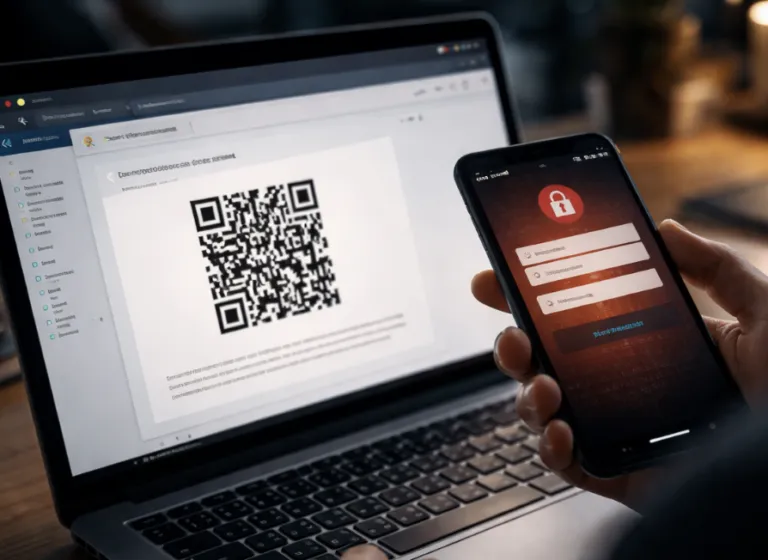
QR Code Phishing (Quishing): How It Bypasses Your Email Filters
There is a version of a phishing email that your gateway almost certainly cannot read. It arrives with a clean sender reputation, no suspicious links in the body,…
Get a quote…